Seasoned vs Green vs Kiln-Dried Firewood: What’s the Difference?
October 28, 2026 · West East Firewood, Millersport, Ohio
The single biggest factor in how well firewood burns isn’t the species — it’s the water inside it.
Green firewood
Freshly cut wood is 40–60% water by weight. It’s heavy, hard to light, hisses and smokes, and much of its energy goes into boiling off water instead of heating your room. That cooler, smoky burn also leaves more creosote in your chimney, a common cause of chimney fires.
Seasoned firewood
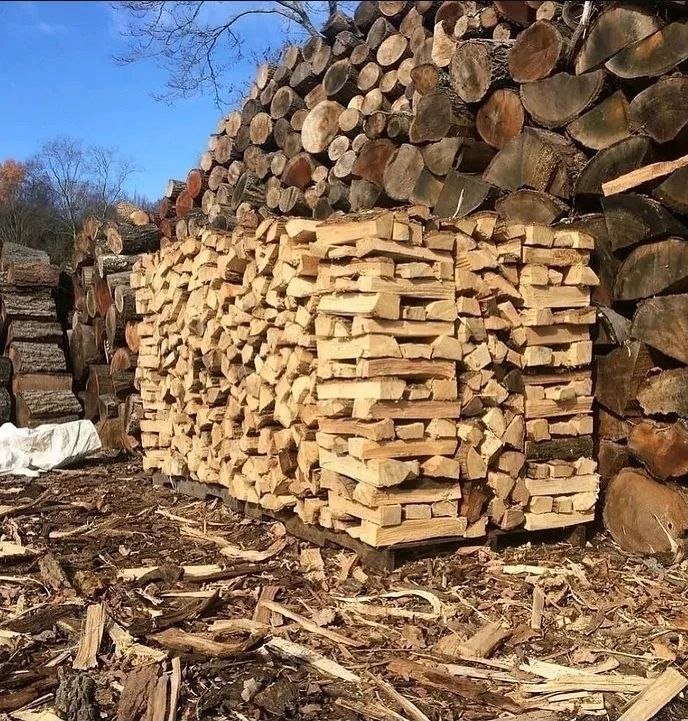
Seasoned wood has been split and stacked to air-dry, usually for 6–12 months or more depending on species and climate. Well-seasoned wood typically reaches about 20% moisture — but “seasoned” isn’t a regulated term, and wood that sat in a damp, tarped pile may still be wet inside.
Kiln-dried firewood
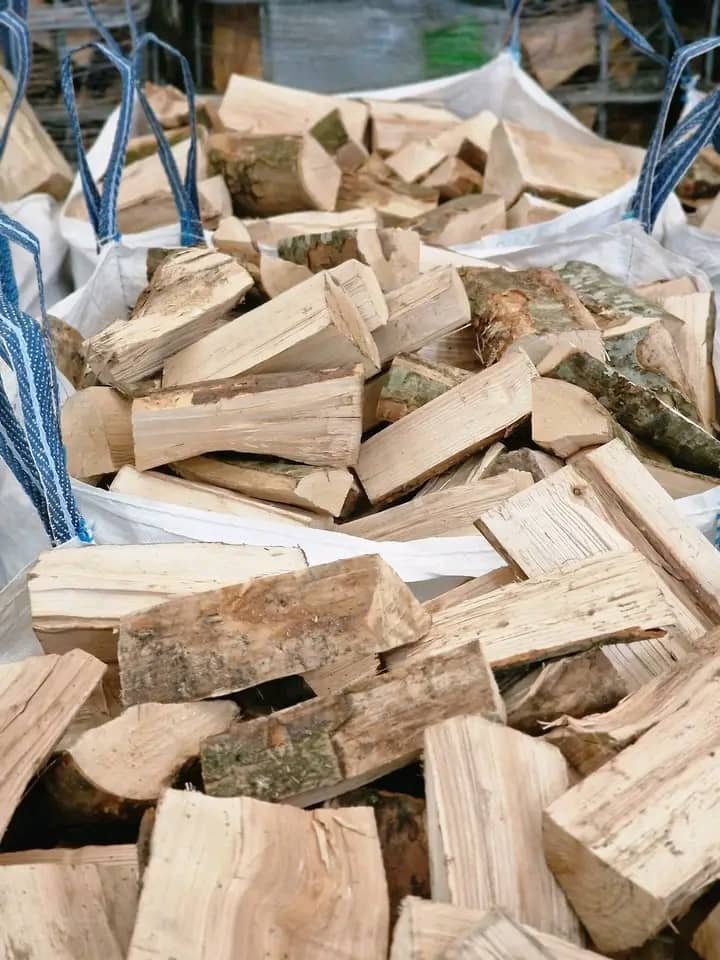
Kiln-dried wood is dried in a heated chamber, which brings moisture down faster and more evenly. Our target is under 15–18%, checked with a meter before the wood leaves the yard.
How to tell at home
- Weight: dry splits feel noticeably lighter.
- Sound: knock two pieces together — dry wood rings, wet wood thuds.
- Ends: dry wood shows cracks (checks) radiating from the center.
- Meter: a cheap moisture meter on a freshly split face is the only real test.
The bottom line
Dry wood gives more heat per log, less smoke and a cleaner chimney. Browse our kiln-dried firewood or read why kiln-dried.